
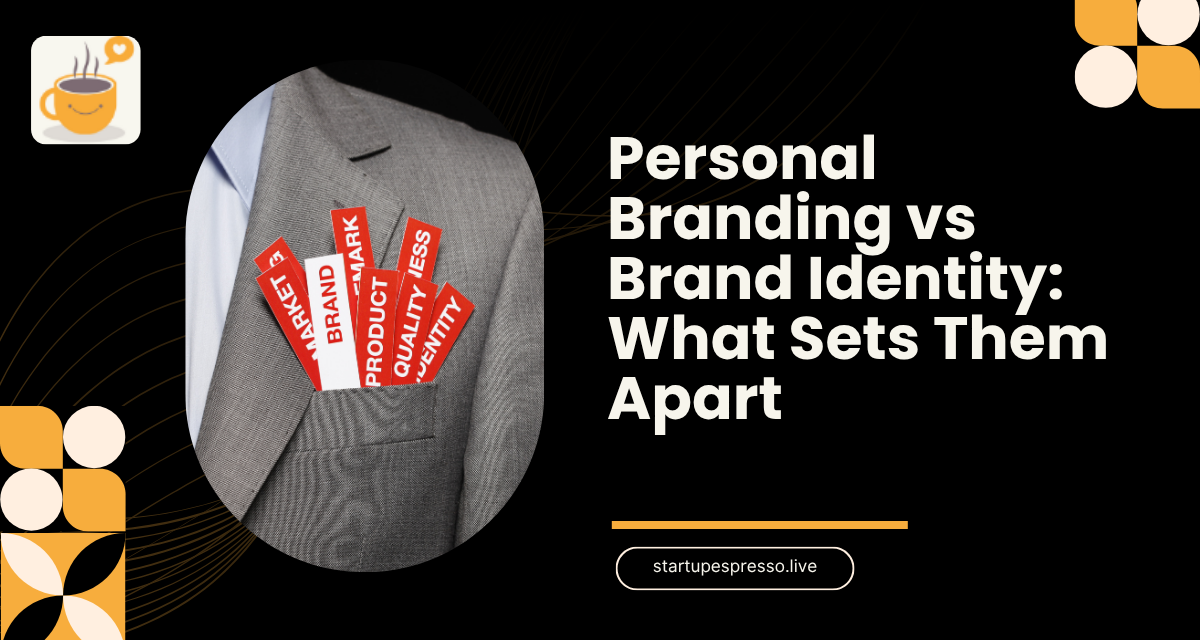
Most folks treat personal branding and brand identity like they’re the same thing—spoiler: they’re not. One’s about people, the other’s about systems. Mix them up, and you risk sending the wrong signals to your users, partners, or even future buyers. This isn’t just a naming issue; it’s a trust issue. When you’re scaling fast or merging with another company, knowing where the line is between personal branding vs brand identity can be the difference between keeping your users or confusing the hell out of them. Let’s break it down without fluff—just what matters and why it matters now.
Defining Personal Branding
Personal branding is about how a person presents themselves to others. It’s not about logos or color palettes. It’s about the way someone shows up, speaks, and shares what they believe in. It’s how people remember you after a meeting, pitch, or post. Unlike company branding, this is tied to one person—what they stand for and how they act.
This kind of branding isn’t built overnight. It takes consistency across platforms—social media, interviews, talks, even email signatures. Every interaction helps shape it. When done right, it builds recognition and trust without needing a big budget.
A strong personal brand reflects skills and beliefs clearly. People know what you do and why you do it. Whether you’re launching products or leading teams, your name carries weight because of the reputation you’ve built.
The key difference between personal branding vs brand identity lies in ownership and purpose. Brand identity belongs to a business—it includes design systems and market positioning created by teams. Personal branding is driven by an individual’s actions and voice.
Why does this matter? Because when companies grow or change hands—like in acquisitions—the risk of losing that human connection grows fast.
Understanding Brand Identity
Brand identity is what people see and hear when they come across a company. It’s the logo on your homepage, the font in your emails, the tone of your messages, even the colors on your packaging. These pieces form a system that helps people recognize who you are.
This isn’t about personal opinions or leadership styles. It’s not tied to individual voices or faces. That’s where personal branding vs brand identity draw a clear line. Brand identity belongs to the business itself—not to any one person inside it.
Every brand needs consistency. If you change how you sound or look every few months, people won’t know what to expect from you. That confusion can push them toward someone else who offers something more stable.
When companies grow fast or get acquired, this consistency often takes a hit. People at the top think they’re improving things—new design, new voice—but they forget how much users care about what felt familiar before.
Take FoodPanda buying HipMenu as an example. Before the deal, HipMenu had its own way of speaking and engaging with users. After being absorbed into FoodPanda’s system, that identity disappeared. Users noticed right away—and many didn’t stick around.
Ignoring brand recognition during an acquisition doesn’t just confuse users—it opens doors for rivals to step in and win them over instead.
Founders and marketers trying to avoid those mistakes should check out this podcast episode. Florin and Paul break down exactly why preserving core elements like tone and design matters after an acquisition—and how failing to do so can backfire hard.
Understanding what makes up brand identity isn’t optional if you’re building something meant to last longer than a trend cycle. Logos fade fast without meaning behind them—so getting this part right is non-negotiable if you want trust that sticks around through changes ahead.
Personal Branding vs Brand Identity
People often mix up personal branding and brand identity. They sound similar, but they don’t do the same job. One is about a person. The other is about a company or product. That’s the line you need to see clearly.
Personal branding deals with how someone wants to be known. It’s tied to who they are, what they stand for, and how they show up in public spaces—online or offline. It includes their values, tone of voice, behavior, and content. When someone follows a founder on LinkedIn because of what they say or how they think—that’s personal branding doing the heavy lifting.
Brand identity isn’t about people—it’s about systems. It’s your logo, color scheme, fonts, packaging style, messaging rules—all working together so users recognize your product without reading the name twice. It builds trust through consistency across every touchpoint—from app screens to email headers.
Here’s where it gets tricky: both play roles in shaping perception and building loyalty—but at different levels. Personal branding vs brand identity becomes obvious when you ask: Who owns this story? If it belongs to one person—it’s personal branding. If it’s connected to a team-built experience—it leans into brand identity.
Why Both Matter in Today’s Market
People don’t connect with logos. They connect with faces, voices, and stories. That’s where personal branding steps in. It brings the human side to a business, especially when companies feel cold or distant. A founder who shows up online, shares their thoughts, and stands for something builds trust faster than any slogan can.
But that doesn’t mean brand identity takes the back seat. Without it, companies lose structure. Brand identity brings consistency—across visuals, tone of voice, and how a product feels. It helps people recognize what they’re dealing with before they even read a word.
The clash between personal branding vs brand identity isn’t about choosing one over the other—it’s about making them move together. When aligned well, personal branding amplifies company values while brand identity anchors them in something recognizable.
Take what happened with HipMenu after FoodPanda took over. The new owners didn’t just change colors or tweak features—they ignored what users loved most: the original vibe and feel of the product. The fallout? Loyalty vanished fast and competitors stepped in without hesitation.
This story is more than a cautionary tale—it’s proof that you can’t fake connection or force change without pushback from your audience. If personal branding had stayed visible during that shift—or if FoodPanda had respected HipMenu’s existing identity—the outcome could’ve looked different.
For founders trying to keep user trust through changes like acquisitions or pivots, it’s not enough to update fonts or post on LinkedIn once a month. You need both: the face behind the mission and a clear visual system that backs it up every step of the way.
Want to see how badly things can spiral when these two elements get out of sync? Listen to Florin and Paul break down exactly how it went wrong at Preserving Brand Identity Post-Acquisition.
Owning Your Brand in a Noisy Market
As we’ve unraveled, personal branding vs brand identity isn’t just semantics—it’s the difference between being a name people trust and a logo they forget. Personal branding is your voice, your values, your vibe; brand identity is how that essence gets packaged and perceived. Both fuel recognition, loyalty, and growth—but only when they’re aligned. Miss that mark, and you risk becoming noise in an already crowded space.






Recent Comments